


If your Jeep Wrangler JL gets loud at highway speed, you are not imagining it. Road noise and wind noise come through the floor, the doors, and the hardtop, and one product rarely fixes all three.
This guide shows how to treat a JL in layers. You will learn where the noise enters, which areas to tackle first, and which SoundSkins products fit each job. It is written for owners of the 2018 and newer Wrangler JL who want a quieter cabin without a full teardown.
Why the Jeep Wrangler JL is loud
Three areas carry most of the road noise into a JL cabin: the floor, the doors, and the roof. Each one is a large, thin sheet of metal. When tire vibration reaches it, the panel rings and turns into the drone you hear on the highway.
Wind noise comes from a different source. Air moving over the body, past the door seals, and along panel edges creates whistling and buffeting. Gaps and worn seals make it worse, so a good fix addresses both the panels and the openings.
For a broader look at how damping handles tire, wind, and exhaust noise, read Advantages of Sound Damping in Every Vehicle Explained.
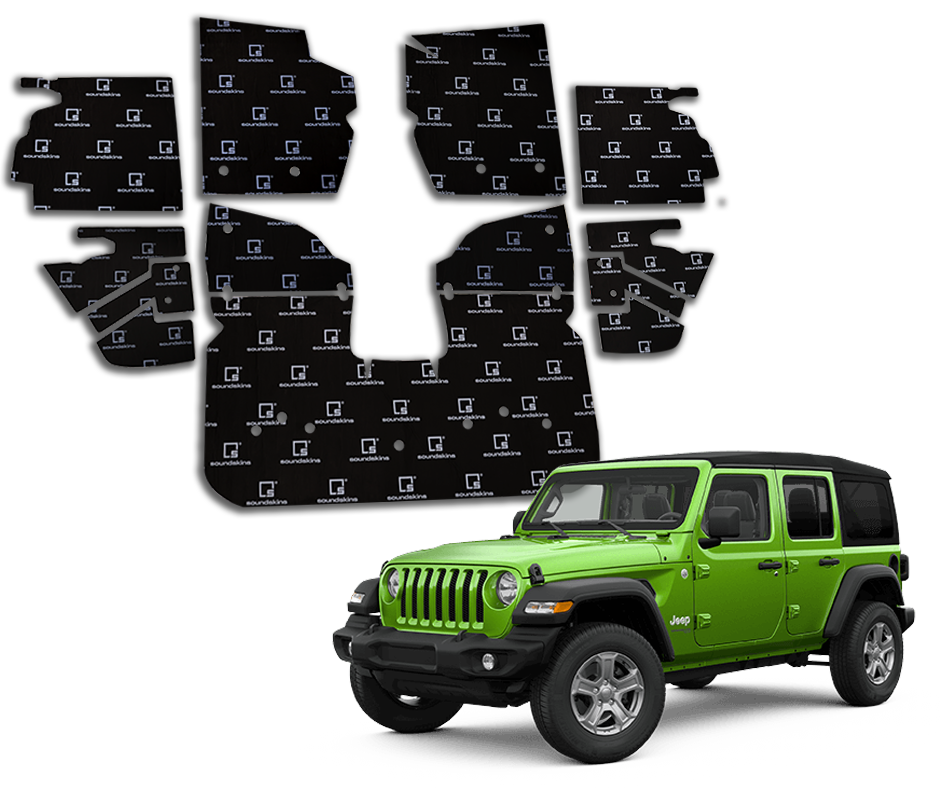
The fix that actually works
Work through the JL in this order: seals, floor, doors, then roof. Sound deadening adds weight and damping to metal, but it cannot close an air leak, so the seals come first.
- Check the seals. Inspect the door weatherstripping, the hardtop seals, and any gaps at the windshield and roof edges. The Bronco guide makes the same point: check weatherstripping and roof seals before adding material.
- Treat the floor. The floor pan is a large flat panel that carries tire roar up into the cabin. A butyl layer adds weight to the metal and damps its vibration.
- Treat the inner door panels. Treated doors cut side wind noise, reduce rattle, and improve speaker sound. The JL template kit covers the inner panels on all four doors.
- Treat the roof and hardtop. Hardtop panels can ring under wind and road vibration, and the Bronco guide recommends treating them for that reason. The JL kit does not cover the hardtop, so this step needs a separate roll.
- Add foam where airborne noise remains. Foam absorbs higher-pitched sound that travels through the air, which added mass alone will not stop. The advantages guide explains why foam and butyl do different jobs.
Recommended products
Every product below showed an Add to Cart button when checked on 9 November 2026. Stock can change, so recheck each page before publishing.
|
Product |
What it covers |
Size |
Price (USD) |
|---|---|---|---|
|
Inner door panels on all four doors, full floor pan, rear seat section |
43 or 60 sq ft (see checklist) |
$495.00 |
|
|
Inner door panels on all four doors |
21.5 sq ft |
$344.00 |
|
|
Doors, front and rear footwells, trunk, roof behind the headliner |
64.5 sq ft |
$494.00 |
|
|
Outer doors, roof, floor pans |
38.75 sq ft |
$199.00 |
|
|
Closed-cell foam behind door panels, plus rattle control |
32.3 sq ft |
$89.00 |
|
|
Hand tool that presses material flat and removes air bubbles |
Hand tool |
$17.95 |
For a JL, the template kit handles the doors and floor in one order. Add the Classic Black roll or the Pro Plus kit for the hardtop, and use the Wavy Foam for rattles and airborne noise. The JL template kit page says kits are made to order, so allow time before shipping.
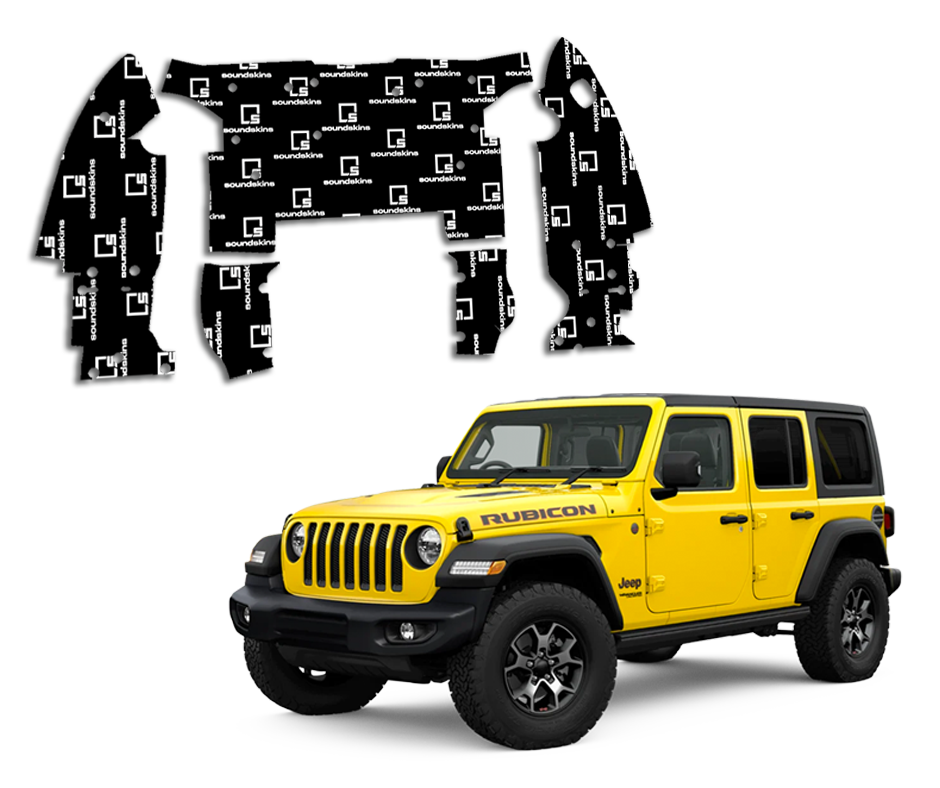
Install approach for floor, doors, and hardtop
Plan the job around access, because the floor and doors are hard to reach until the seats and trim come out. Work panel by panel and roll each piece before moving on.
- Plan the access. Expect to remove the seats, floor coverings, and trim to reach the floor. The removal guide describes the same access work when stripping old material.
- Clean the bare metal. Vacuum loose debris and wipe each panel before you press material on. Clean metal gives the butyl layer a better bond.
- Roll every piece. Press each piece flat with the SoundSkins Roller, working outward from the centre to push out air bubbles.
- Keep door openings clear. The window track, lock rods, and bottom drain holes must stay free of material, according to the Pro Door Kit page.
- Work on the hardtop off the vehicle. If you have removed the hardtop, lay it flat so you can reach every panel evenly.
- Handle old material with care. If old material is in place, follow the warnings in the removal guide: high heat can damage interior and electrical parts, and metal tools scratch surfaces.
FAQ
Will sound deadening fix wind noise on its own? Not if air leaks through worn seals. Check and replace weatherstripping first, then add material to the panels.
Does the JL kit cover the hardtop? No. The JL template kit covers the inner door panels, the floor pan, and the rear seat section. For the hardtop, add the Classic Black roll or the Pro Plus kit.
Which JL kit should I buy? Choose the template kit at $495.00 for doors and floor together. Choose the 4-Door Kit at $344.00 if you only want the doors treated.
Can I install it myself? Yes, if you have the time to pull the seats and trim. Access and cleaning matter more than tools, so follow the steps above.
Does the JL kit fit every model year? The product page describes the kit as suitable for 2018 and newer Wrangler JL models. The page title and URL say 2018 to 2022, so confirm the fit for your model year before ordering.
Conclusion
A quieter JL comes from layers, not one product. Seal the openings, treat the floor and doors with the JL template kit, then cover the hardtop with a roll and add foam where airborne noise remains.
For more on the same ideas, read Advantages of Sound Damping in Every Vehicle Explained, Best Sound Deadening Ideas for Ford Bronco Owners, and Toyota RAV4 Road Noise Fix for a Quieter Daily Drive. Ready to start? Shop the Pro Jeep Wrangler JL Template Kit.


